
The suppliers you choose have a direct impact on everything that comes out of your kitchen. Product quality, cost control, menu consistency, and the reliability of your daily operations all run through your supply chain. Get it right and your kitchen runs smoothly. Get it wrong and you're dealing with late deliveries, inconsistent ingredients, and costs that are hard to control.
For restaurant operators, whether you're opening your first location or re-evaluating an existing supplier relationship, knowing how to identify, evaluate, and work with the right food suppliers is one of the most important operational skills you can develop.
This guide walks through everything you need to know: what to look for in a wholesale restaurant supply partner, how many suppliers to work with, how to vet potential suppliers before committing, and how to manage those relationships over time.
Know What Your Restaurant Needs Before You Start
Before you start comparing suppliers, get clear on what your operation actually requires. The right supplier for a high-volume burger concept looks very different from the right supplier for a farm-to-table café or a fast-casual taco shop.
Start by asking these questions:
- What product categories do you need? Proteins, produce, dairy, dry goods, frozen items, beverages, paper products, cleaning supplies — not every supplier covers all of these, and knowing your list upfront helps you evaluate the breadth of product offerings from the start.
- How much volume do you move? Your weekly and monthly purchasing volume affects whether you can meet supplier minimums, qualify for better pricing tiers, or justify a dedicated distributor relationship.
- How much storage do you have? Limited on-site storage means you need more frequent, smaller deliveries. Ample storage means you can buy in bulk and reduce per-unit costs.
- What are your budget and payment term needs? Some suppliers require payment on delivery. Others offer net-30 or net-60 terms. Knowing what your cash flow can support helps you filter options early.
Understanding the different types of suppliers: broadline distributors, specialty food distributors, and wholesale warehouse suppliers is also an important first step. For a full breakdown of how these models compare and which might be the right fit for your restaurant, read our guide on Food Distributors vs. Wholesale Warehouses.
What to Look for in a Restaurant Food Supplier
The most important factor in choosing a food supplier isn't price, it's reliability. A supplier who delivers the right products, in the right condition, on time and consistently, is worth more than one who offers slightly lower prices but creates operational headaches.
That said, price also matters. The best supplier relationships deliver on both.
Here's what to evaluate when comparing potential suppliers:
1. Product quality and consistency
Your food is only as good as your ingredients. A supplier's product quality needs to be consistent order to order, not just impressive on the first sample. Ask how they source their products, what quality standards they hold their vendors to, and what the process is when a product doesn't meet spec.
2. Food safety and quality standards
Your supplier's food safety practices become part of your operation. Look for suppliers who follow established food safety protocols, maintain proper cold chain handling, and can provide documentation on their standards if asked.
3. Reliability and delivery schedule
Late or missed deliveries don't just cause stress — they affect your menu and your customers. Evaluate a supplier's track record for on-time delivery before you commit. Ask other operators about their experience, and look for suppliers with the infrastructure to back up their delivery promises.
4. Pricing and payment terms
Compare pricing across suppliers for the same items, but look at the full picture — not just unit cost. Factor in delivery fees, minimum order requirements, and payment terms. A supplier with slightly higher unit prices but flexible payment terms may be the better fit for your cash flow.
5. Product range and availability
The broader a supplier's product offerings, the more you can consolidate your purchasing and simplify your supply chain. A supplier who can cover most of your categories reduces the number of vendor relationships you have to manage.
6. Customer service and track record
When something goes wrong (and at some point it will) you need a supplier who responds quickly and resolves issues without friction. Ask how they handle short shipments, damaged products, or billing disputes. Their answer tells you a lot about what the relationship will look like long-term.
How Many Suppliers Should You Work With?
Most restaurants work with more than one supplier, but the right number depends on your concept, volume, and operational capacity.
The Case for Fewer Suppliers
Consolidating your purchasing with one or two primary suppliers simplifies ordering, reduces the number of invoices and relationships to manage, and often unlocks better pricing through volume. It also means fewer delivery windows to coordinate and less time spent on vendor communication.
The Case for Multiple Suppliers
No single supplier excels at everything. A broadline wholesale supplier might be your go-to for dry goods, dairy, and frozen items, while a local produce vendor delivers fresher, more seasonal ingredients than any large distributor can. A specialty food distributor might be the only source for specific ingredients your menu depends on.
Using multiple suppliers also protects you from supply chain disruptions. If one supplier runs short on a key item, having an alternative relationship already in place keeps your kitchen running.
A Practical Approach
Most well-run independent restaurants land somewhere in the middle: one primary wholesale or broadline supplier that covers the majority of their volume, supplemented by one or two specialty or local relationships for specific product categories. Start with your primary supplier, get that relationship dialed in, and add specialty suppliers as your menu and volume warrant.
How to Find and Vet Potential Suppliers
Knowing what you're looking for is half the battle. Finding the right suppliers and confirming they can deliver on their promises is the other half.
Where to look
- Peer referrals the most reliable starting point. Ask other restaurant operators in your market who they use and trust. Real-world experience from someone running a similar concept is more valuable than any sales pitch.
- Trade shows and industry events gives you direct access to suppliers and the ability to sample products, compare offerings, and build relationships in person. Local and regional restaurant association events are worth attending for this reason alone.
- Industry associations like your state's restaurant association often maintain supplier directories and can connect you with vetted partners in your area.
- Online research and directories can help you build an initial list, but always follow up with direct conversations and references before making a decision.
How to Vet a Potential Supplier
Once you've identified candidates, don't skip the due diligence:
- Request samples of the products you'd be ordering regularly. Evaluate quality, consistency, and packaging before committing to a full order.
- Ask for references from other restaurant accounts they serve — ideally operations similar to yours in size and concept.
- Review the terms carefully. Understand minimum order requirements, delivery schedules, pricing structures, and what happens if a delivery is short or a product arrives damaged.
- Start with a trial order before signing any long-term agreement, run a trial period. A supplier who performs well under normal conditions but falls short during a busy week tells you something important.
Building Strong Supplier Relationships
Choosing the right supplier is the starting point. Building a strong relationship with them over time is what turns a transactional arrangement into a genuine operational advantage.
Communicate consistently
Keep your supplier informed about changes to your volume, menu, or ordering patterns before they happen. Good communication prevents shortfalls and gives your supplier the lead time to support your needs. The restaurants that get the best service from their suppliers are usually the ones that make their suppliers' jobs easier.
Pay on time
It sounds basic, but consistent, on-time payment is one of the most effective ways to build goodwill with a supplier. It signals that you're a reliable account and, over time, can give you leverage to negotiate better pricing or more flexible terms.
Give feedback
If a product isn't meeting your standards or a delivery is consistently late, say so directly. Suppliers want to keep good accounts. Constructive feedback gives them the opportunity to fix the problem before it becomes a reason to switch.
Know what to do when problems arise
Issues will happen — a short shipment, a damaged product, a missed delivery window. How you handle it matters as much as how they do. Document the issue, communicate it clearly, and give the supplier a reasonable opportunity to make it right. If problems recur despite your feedback, that's the signal to start evaluating alternatives.
Managing Your Restaurant Supply Chain
Once your supplier relationships are in place, the work shifts to managing them effectively. A well-managed supply chain keeps your kitchen stocked, your costs predictable, and your team focused on the food and not on scrambling for missing ingredients.
What is a Restaurant Supplier Management System?
A restaurant supplier management system is a tool or process, ranging from dedicated software to well-organized spreadsheets that helps you track orders, monitor deliveries, manage invoices, and maintain visibility over your purchasing activity across all suppliers. At a minimum, it should give you a clear picture of what you've ordered, what's been delivered, and what you've paid.
More sophisticated systems can flag pricing discrepancies, track order accuracy by supplier, and generate purchasing reports that help you identify where costs are rising and where you might consolidate.
Inventory Management Basics
Effective supplier management starts with knowing what you have on hand. Regular inventory counts (daily for high-turnover items, weekly for everything else) give you the data to order accurately and avoid both overstocking and running short. Tying your inventory data to your purchasing decisions is how you keep food costs in check.
When to Switch Suppliers
Loyalty to a supplier is reasonable, but not at the expense of your operation. Consider evaluating alternatives when a supplier consistently misses deliveries, product quality declines without explanation, pricing increases without added value, or their customer service becomes unresponsive. Switching suppliers mid-operation carries some risk, so always have an alternative identified and vetted before you make the move.
Stock Your Restaurant With Shamrock Foodservice Warehouse
Choosing the right food supplier comes down to a clear set of criteria: product quality, reliability, range, pricing, and the kind of customer service that holds up when things get complicated.
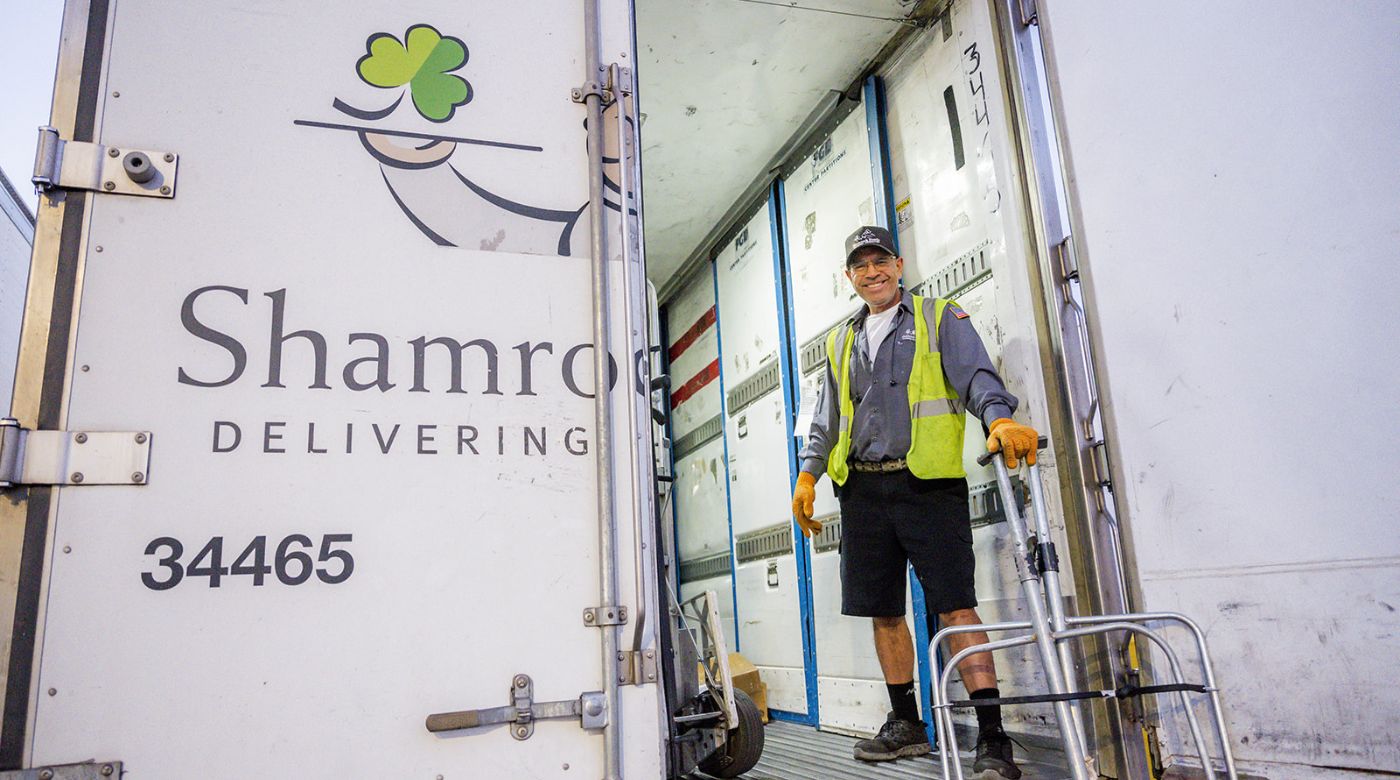
Shamrock Foodservice Warehouse checks those boxes for independent restaurants, food trucks, coffee shops, caterers, and other foodservice operators, with 15 warehouse locations in Arizona, Colorado, Montana, New Mexico, and Texas, Shamrock carries thousands of chef-approved products across every major category:
- Proteins
- Produce
- Dairy
- Frozen
- Dry goods
- Beverages
- Paper products
And more all at wholesale pricing with no membership fees required.
Need something that's not on the shelf? Shamrock's special order program offers next-day delivery on most items. And as part of the Shamrock Foods family, you're working with a supplier with the track record and infrastructure to back up what they promise.
Find your nearest Shamrock location and start shopping!