

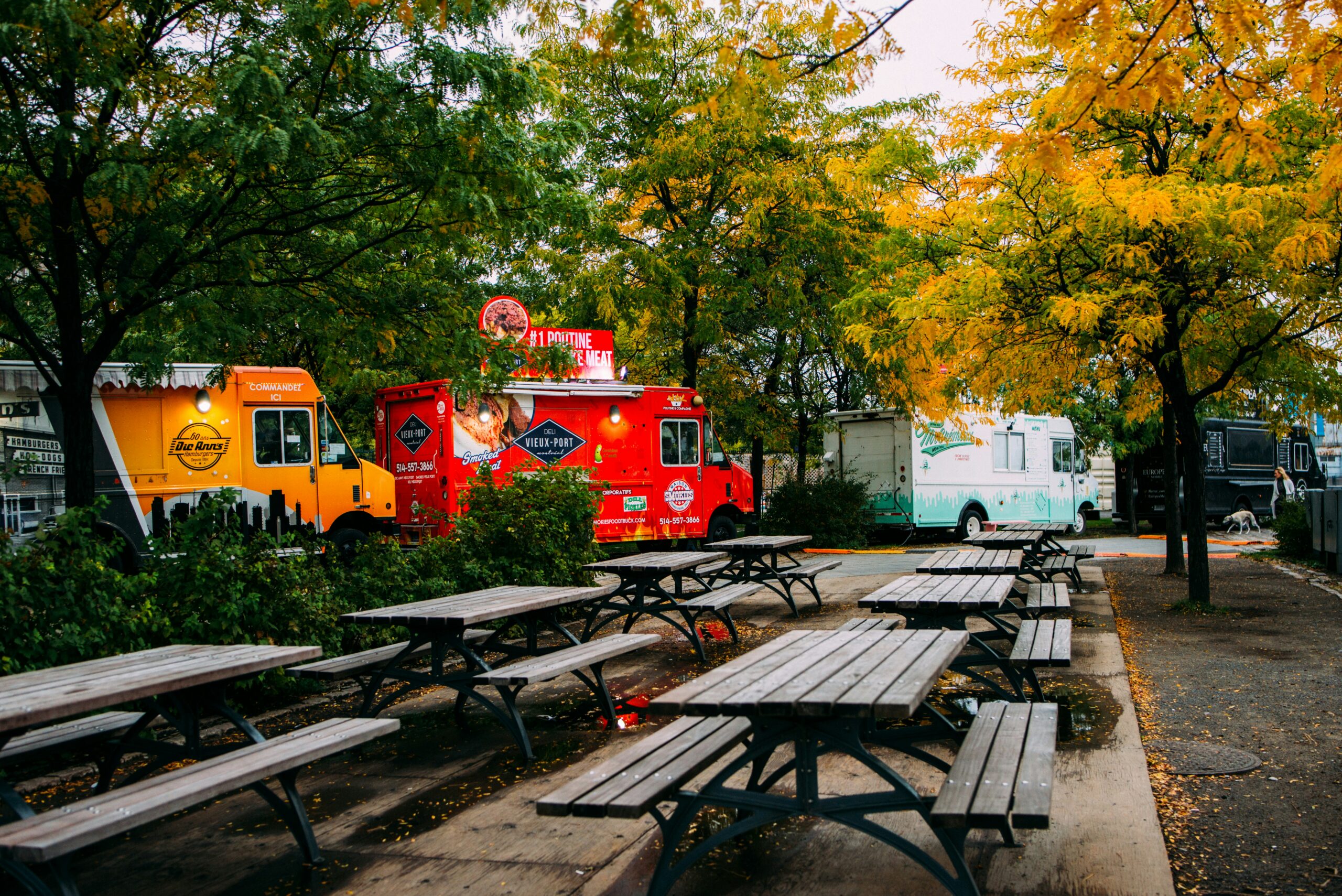
Starting a food truck business is one of the most exciting ways to enter the food industry. Lower overhead than a brick-and-mortar restaurant, the freedom to take your concept anywhere, and the creativity to build a menu entirely your own.
But the road from idea to opening day is paved with a lot of moving parts. With so many equipment decisions, permit requirements, supply needs, and compliance considerations, it’s easy for something critical to fall through the cracks.
That’s why preparation isn’t just helpful, it’s everything. Having a complete and organized food truck supplies checklist before you spend a single dollar on equipment can save you thousands and prevent delays that push back your launch.
This guide is your comprehensive food truck supplies list- covering every tool, system, piece of equipment, and requirement you’ll need to get your food truck up and running and keep it running. Download the printable checklist PDF to use as your personal planning tool, customized to your concept.
What Supplies Do You Need to Start a Food Truck?
Food truck supply needs fall into a few distinct categories that are worth understanding before you start purchasing:
- Equipment refers to the durable goods that stay in your truck: cooking appliances, refrigeration units, prep tables, and the like. These are significant upfront investments that should be chosen carefully.
- Supplies are the consumables and tools you’ll replenish regularly: packaging, cleaning products, disposable gloves, and food storage containers.
- Infrastructure covers the systems your truck runs on: electrical, plumbing, gas, and ventilation, which need to be installed, inspected, and maintained.
Understanding the difference matters because each category has its own purchasing timeline, budget considerations, and compliance requirements. This checklist covers all three, organized by category so you can plan systematically and avoid scrambling at the last minute.
Mobile Kitchen & Food Truck Kitchen Setup
Before a single piece of equipment goes into your truck, you need a plan. A well-thought-out kitchen setup isn’t just about fitting everything in. It’s about creating a workspace that supports speed, safety, and sanity during a busy service. Getting your utilities, materials, and organizational systems dialed in from the start will make every shift smoother and every inspection easier.
Food Truck Kitchen Layout and Workflow
The most efficient food truck kitchens use a linear, assembly-line workflow: food moves in one direction, from storage to prep to cook to service. This minimizes cross-traffic between functions, reduces the chance of contamination, and keeps your team from bumping into each other during a rush.
A few key layout strategies to build around:
Zone your truck clearly: Even in a 10- or 16-foot truck, define distinct zones: a cold/storage zone near the entrance, a prep zone in the middle, a cook zone near the service window, and a plating/handoff area right at the window.
Choose multi-functional equipment: Space is limited. Prioritize equipment that can handle more than one job (a combi oven, for example, can bake, steam, and roast).
Design your menu around your layout: Menus that use shared ingredients across multiple items reduce prep complexity and the amount of storage space you need.
Keep service fast: Arrange your most-used tools and ingredients within arm’s reach of where they’ll be used. Reaching across stations slows everything down.
Work Surfaces and Structural Materials
The industry standard for food truck work surfaces is stainless steel (Type 304) and for good reason. It’s durable, heat-resistant, easy to sanitize, and non-porous, which is important for health department compliance. When you’re evaluating your truck build or outfitting your workspace, stainless steel should be your default for prep tables, shelving, and wall surfaces near cooking equipment.
For operators working within a tighter budget, food-grade aluminum is a lightweight and cost-effective alternative for some surfaces, though it requires more care to avoid pitting and corrosion over time.
Work Surface Checklist
- Stainless steel prep table(s)
- Wall-mounted stainless shelving above work areas
- Stainless steel equipment stands
- Non-slip flooring (commercial rubber mat or welded diamond-plate)
- Under-counter storage areas (drawers or shelving)
Storage and Organization Systems
Working in a small space means organization is non-negotiable. Every inch of storage needs to work hard, and your system needs to make ingredients and supplies easy to find and rotate during a busy shift.
Cold storage: Undercounter refrigerators and reach-in coolers keep your perishables accessible during service. Organize by zone: proteins on one shelf, dairy on another, prepped ingredients front and center.
Dry storage: Maximize vertical space with wall-mounted or freestanding stainless shelving. Use clear polycarbonate containers (square containers stack better than round) with tight-fitting lids to keep ingredients fresh and stackable.
Inventory rotation: Use the FIFO method (First-In, First-Out): older stock goes to the front, newer deliveries go to the back. For most fresh ingredients, a three-to-five day shelf life is a good working assumption, but do an inventory check before every shift to catch anything that needs to be used or pulled.
Labeling: Label everything with the item name and date received or prepped. Color-coded labels by day of the week are a simple, fast system that keeps your team aligned without slowing anyone down.
Storage & Organization Checklist
- Clear polycarbonate food storage containers (quart, 2-qt, 4-qt, 6-qt)
- Stackable ingredient bins with scoops
- Stainless steel wire or solid shelving units
- Label maker or label tape + markers
- Food rotation labels (day-of-week dots)
- Insulated food transport pans (Cambro or equivalent)
Essential Cooking and Food Preparation Equipment
Once your kitchen is laid out and your storage systems are in place, it’s time to stock it with the right tools for the job. Your cooking equipment is the heart of your operation and getting this right means matching your equipment to your specific menu, not just buying the most popular appliances.
Primary Cooking Equipment Categories
The cooking equipment you need depends almost entirely on your menu. Here’s a breakdown by category:
Grills and Griddles
- Flat-top griddle (great for burgers, breakfast items, smash burgers, stir-fry)
- Open-flame grill (for char-grilled proteins and vegetables)
- Panini or sandwich press
Fryers
- Countertop deep fryer (single or double basket)
- High-efficiency commercial fryer for high-volume operations
Ranges and Ovens
- Two- or four-burner commercial range
- Combi oven (steam/convection) — excellent for multi-purpose cooking
- Salamander or broiler for finishing dishes
Specialty Equipment (menu-dependent)
- Smoker (BBQ concepts)
- Wok station (Asian street food)
- Pizza deck oven (flatbread or pizza concepts)
- Steam table for hot holding
Important: Always purchase commercial-grade equipment, not residential appliances. Commercial equipment is built for continuous use, meets health department requirements, and is compatible with commercial fire suppression systems.
Food Preparation Tools and Stations
Prep tools are the unsung heroes of a food truck- having the right ones on hand keeps your workflow fast and consistent.
Prep Tools Checklist
- Chef’s knives, paring knives, serrated knives (minimum 2 sets)
- Knife sharpener or honing steel
- Cutting boards: color-coded by food type (red for raw meat, green for produce, white for ready-to-eat)
- Prep/portioning bowls (stainless steel, various sizes)
- Sheet pans and hotel pans
- Spatulas, tongs, ladles, whisks, spoodles
- Portion scoops and scales (for consistent servings and cost control)
- Thermometers: instant-read and clip-on for monitoring cooking temps
- Squeeze bottles for sauces and condiments
- Can opener, vegetable peeler, mandoline
Refrigeration and Temperature Control
Keeping food at safe temperatures is an important health code requirement and is foundational to food quality. Your refrigeration setup needs to handle both storage and active service conditions.
Refrigeration Checklist
- Undercounter refrigerator (primary working fridge during service)
- Reach-in refrigerator or freezer (for backup stock)
- Cold holding pans (for prepped ingredients at the service window)
- NSF-certified food thermometers (one per prep station)
- Refrigerator thermometers (hang one in every unit)
- Temperature log sheets (required by most health departments)
Food Storage, Dispensing, and Service Supplies
Beyond your cooking equipment, you’ll need a well-stocked supply system for everything that goes around the food: how it’s stored before service, how it’s dispensed during service, and how it gets into your customers’ hands.
Ingredient and Product Storage
Effective ingredient storage keeps your prep fast, your waste low, and your health inspections clean.
Container & Shelving Checklist
- Clear polycarbonate containers with lids (multiple sizes)
- Stainless steel or NSF-approved plastic shelving
- Spice racks or rails for frequently used dry ingredients
- Squeeze bottles (labeled) for oils, sauces, and liquids
- Cambro food transport carriers for bulk prep items
- Zip-lock bags and food wrap for short-term storage
- Pre-printed or writable food rotation labels + permanent markers
Condiment and Topping Stations
A well-organized condiment and topping station speeds up your service line and reduces errors during a rush. Whether your station is self-serve or crew-operated, having the right dispensing tools makes a big difference. Keep your condiment station as close to the service window as possible- having to reach across the truck for toppings is a bottleneck you’ll feel immediately during a busy period.
Condiment Station Checklist
- Squeeze bottles (clearly labeled with contents)
- Condiment dispensers (pump-top for high-use items like ketchup, mayo, or aioli)
- Portion cups and lids (1 oz, 2 oz, 4 oz)
- Spoodles and ladles for saucy toppings
- Topping bins or insert pans (sixth-pans or ninth-pans work well in tight spaces)
- Napkin holders and dispensers
Packaging and To-Go Supplies
Your packaging is part of your brand and for a food truck, everything is to-go by default. Invest in packaging that holds up, travels well, and if possible, reflects your brand identity.
To-Go Packaging Checklist
- Takeout containers (clamshell, hinged, or two-piece- match to your menu)
- Paper boats, trays, or baskets (great for street food formats)
- Soup or sauce cups with lids
- Beverage cups and lids (hot and cold)
- Straws (paper straws increasingly required by local ordinance)
- To-go bags (flat-bottom bags hold containers better)
- Napkins, disposable flatware, condiment packets
- Wet wipes or hand wipes
Many cities and events now require compostable or recyclable packaging for food trucks operating in public spaces. Check local regulations before purchasing in bulk and consider this a branding opportunity. Customers notice when you’ve made the effort.
Safety, Sanitation, and Health Department Compliance
Safety and sanitation aren’t just about passing inspections. They’re also about protecting your customers and your business. A single health violation can shut you down for a day; a serious one can end your operation entirely. Build these systems into your daily routine from day one.
Fire and Emergency Safety Equipment
Food trucks operate with open flames, hot oil, and high-heat cooking equipment in a compact space. Fire safety requirements are strict, and for good reason.
Fire Safety Checklist (NFPA 96-compliant)
- Automatic fire suppression system for all cooking equipment (professionally installed and certified)
- Class K fire extinguisher (for fires involving cooking oils and fats)
- ABC fire extinguisher (for general fires)
- Semiannual fire suppression system inspection (schedule this- it’s required)
- 10-foot clearance from structures when operating
- Secured propane tanks (chained or strapped, away from heat sources)
- Staff training on emergency shutdown procedures
- Posted emergency contacts and evacuation plan inside the truck
Cleaning and Sanitation Supplies
Food truck cleaning operates on a three-step process for all food-contact surfaces: clean, rinse, sanitize. This applies to prep surfaces, cutting boards, equipment, and utensils after every use.
Sanitation Supply Checklist
- EPA-approved food-safe sanitizer (quaternary ammonium or chlorine-based)
- Three-compartment sink setup (required by most health departments)
- Sanitizer test strips (to verify concentration)
- Color-coded cleaning cloths
- Disposable gloves (multiple sizes)
- Scrub brushes and sponges (replace regularly)
- Degreaser for cooking equipment
- Mop, mop bucket, and floor cleaner
- Handwashing soap and paper towels (at every designated handwashing station)
Meeting Health Department Standards
Health department requirements vary by city and county, but most inspections cover the same core areas. Preparing for your first inspection (and every one after) is a matter of building the right habits from the start.
What Health Inspectors Typically Evaluate
- Temperature control for all food (proper holding temps, calibrated thermometers)
- Food handling practices (glove use, no bare-hand contact with ready-to-eat food)
- Handwashing stations (separate from food prep sinks, with soap and paper towels available)
- Labeling and date-marking on all food containers
- Cleanliness of food-contact surfaces and equipment
- Pest prevention (sealed food storage, no visible pest activity)
- Proper food storage (raw proteins stored below ready-to-eat foods)
Documentation to Keep on File
- Food handler’s certifications for all staff
- Most recent health inspection report
- Temperature logs (daily)
- Cleaning logs
- Suppression system inspection records
Utilities and Infrastructure Requirements
Before you can turn on a single burner, your truck needs to be equipped with the right systems to power it, supply it with water, and safely vent everything it produces. These infrastructure decisions happen during your truck build-out, but you need to understand the requirements before you sign off on anything.
Power and Electrical Systems
Your electrical system needs to handle the combined load of all your cooking equipment, refrigeration, lighting, POS system, and any other powered devices running simultaneously.
- Generator sizing: Most food trucks require a 6,000-12,000 watt generator, depending on equipment load. Add up the wattage of everything running at peak and size up from there.
- Shore power hookup: If you’ll be operating at events or commissary kitchens with electrical hookups, include a shore power inlet so you can plug in instead of running your generator.
- Electrical panel: Your truck should have a dedicated electrical panel with properly sized breakers for each circuit.
- GFCI outlets: Required near any water source.
- LED lighting: Energy-efficient and lower heat output- important in a hot kitchen.
All electrical work in a food truck should be done by a licensed electrician and inspected before operation.
Water and Plumbing Systems
Most municipalities require food trucks to be self-contained, meaning your water system must include both a freshwater supply and a wastewater (grey water) holding tank.
- Freshwater tank: Minimum 40-60 gallons for most operations (more if you’re doing high-volume cooking or multiple services without access to a refill point)
- Grey water tank: Must be at least 15% larger than your freshwater tank
- Three-compartment sink: Required by most health departments for washing, rinsing, and sanitizing equipment and smallwares
- Dedicated handwashing sink: Must be separate from the three-compartment sink, with hot and cold running water, soap, and paper towels
- Food prep sink: Separate from handwashing, used for washing produce and other food items
- Water heater: Most health departments require hot water at a minimum of 100°F at the handwashing sink
Gas and Ventilation
If your truck runs on propane (most do), your gas system and ventilation setup are as important as your cooking equipment itself.
Propane & Gas Checklist
- Propane tanks (properly sized to your BTU load- consult your equipment manufacturer)
- Pressure regulator and gas shutoff valves (one accessible from outside the truck)
- Gas leak detector (install inside the truck near floor level- propane is heavier than air)
Ventilation Checklist
- Commercial hood and exhaust system over all cooking equipment (NFPA 96-compliant)
- Makeup air system to replace exhaust air and prevent negative pressure
- Grease filters (clean regularly – this is a fire hazard when neglected)
- Exhaust fan sized appropriately for your BTU output
Commissary Kitchen and Off-Truck Support Needs
Most food truck operators don’t realize until they’re applying for permits that operating out of your truck alone isn’t enough. The majority of municipalities require a licensed commissary kitchen agreement as a condition of your food truck permit.
Using a Commissary Kitchen
A commissary kitchen is a licensed, commercial kitchen facility that food truck operators use for tasks that can’t happen in the truck, or that require more space and infrastructure than the truck provides.
What a commissary kitchen typically provides
- Food prep space: Larger work surfaces, commercial mixers, and prep equipment for batch cooking
- Storage: Dry storage, walk-in refrigeration, and freezer space for bulk inventory
- Wastewater disposal: Grey water dump stations to empty your truck’s holding tanks
- Cleaning facilities: Large sinks and space to wash and sanitize larger equipment
- Commissary agreement documentation: The formal contract your health department requires as proof of your licensed kitchen arrangement
When evaluating commissary options, look for a facility that’s conveniently located relative to your operating area, has hours that match your prep and cleanup schedule, and has adequate refrigerated storage for your needs.
Logistics and Supply Management
Your commissary kitchen is also the hub of your supply chain. It’s where deliveries arrive, where bulk prep happens, and where you start and end each operating day.
Set a restocking schedule: Know your par levels and reorder before you hit them, not after.
Order in bulk where it makes sense: Non-perishable supplies, packaging, and cleaning products are good candidates. Fresh ingredients need more careful planning.
Coordinate with your commissary on delivery timing: If storage is shared, you may need to time deliveries around other tenants.
Do a pre-shift inventory check: Before every service, confirm you have everything you need. Running out of a key ingredient mid-service is avoidable with a consistent checklist routine.
Shamrock Foodservice Warehouse makes supply management easier for food truck operators, offering a wide range of ingredients, kitchen supplies, cleaning products, and packaging in quantities that work for small- and medium-volume operations- all from a single supplier.
Point-of-Sale, Operations, and Management Tools
Great food and a great setup will only take you so far — the back-end systems that run your business need to be just as solid. Payment processing, order management, and inventory tracking are the operational backbone of a food truck.
Payment and Ordering Systems
Your POS system is one of the most important technology decisions you’ll make. For food trucks, the requirements are a little different than a traditional restaurant:
Mobile-friendly and cloud-based: You need a system that works on a tablet or phone, syncs in real time, and doesn’t crash when your Wi-Fi is spotty.
Offline mode: Essential. If your internet connection drops at a busy event, you cannot afford for your POS to go down with it.
Fast transaction flow: Long lines are a food truck’s biggest enemy. Look for systems with tap-to-pay and quick-charge options.
Card reader: Accept all major credit/debit cards and mobile payments (Apple Pay, Google Pay).
Tip prompting: Easy to overlook, but tip functionality makes a real difference in your crew’s earnings.
Popular POS options for food trucks include Toast, Square, and Clover. Each has different pricing structures and feature sets worth comparing for your volume and menu complexity.
POS Hardware Checklist
- Tablet or mobile device (dedicated to POS)
- Card reader (countertop or handheld)
- Mobile hotspot (separate from your phone plan if possible)
- Portable receipt printer (optional- many customers prefer digital)
- Cash box and starting cash
Order Tracking and Workflow
In a high-volume operation, verbal order communication leads to errors. A few simple tools can dramatically reduce mistakes and keep your team in sync:
Kitchen display system (KDS): A screen in the cook area that shows incoming orders in real time. Most modern POS systems integrate with a KDS.
Order tickets: If you’re not using a KDS, a thermal ticket printer that prints orders to the cook station keeps things organized.
Order numbering system: Assign numbers to orders and call them out at pickup- simple, fast, and prevents confusion at the window.
Reporting and Inventory Tools
The data your POS system generates is one of your most valuable business tools, if you actually use it.
Sales tracking: Review your daily sales report every evening. Know your top-selling items, your slowest days, and your average ticket size.
Inventory management software: Tools like Lightspeed or MarketMan integrate with your POS to track ingredient usage, calculate food cost, and flag when you’re running low.
Food cost calculation: Know your cost percentage for every menu item. If your food cost is running above 30–35%, something needs to change.
Labor tracking: If you have staff, a time-tracking feature helps you manage scheduling and labor cost against revenue.
Insurance, Licensing, and Startup Cost Considerations
Even the most perfectly equipped food truck can’t operate without the right paperwork. Licensing and insurance requirements exist to protect you, your customers, and the public — and they’re non-negotiable.
Insurance Requirements
Food trucks need a combination of insurance policies to be fully covered. Don’t assume one policy covers everything:
General liability: Covers bodily injury and property damage claims from customers or third parties. Required by most events and commissary kitchens.
Commercial auto: Your personal auto policy won’t cover a commercial vehicle. You need a commercial policy for the truck itself.
Product liability: Covers claims related to foodborne illness or injury caused by your product. Sometimes bundled with general liability.
Property/inland marine: Covers your equipment and supplies while in transit or operating at different locations.
Workers’ compensation: Required in most states if you have employees- covers medical costs and lost wages for work-related injuries.
Licensing and Permits
Licensing requirements vary significantly by city and county, but most food truck operators will need some combination of the following:
- Business license (from your city or county)
- Food handler’s permits for yourself and all staff (ServSafe or equivalent)
- Mobile food vendor permit
- Health department permit (tied to your commissary kitchen agreement and truck inspection)
- Fire safety certificate (requires suppression system inspection)
- Vehicle license and commercial registration
- Sales tax permit/seller’s permit
- Zoning and location permits (required in some cities for specific operating locations)
Start your permit research at least 60-90 days before your target launch date. Processing times vary and some permits require inspections that need to be scheduled in advance.
Understanding Startup Expenses
It helps to think about food truck startup costs in layers, so you can budget and prioritize accordingly:
| Cost Category | Typical Range | Notes |
| Truck purchase or build-out | $20,000–$100,000+ | New vs. used, custom vs. converted |
| Commercial cooking equipment | $5,000–$30,000 | Depends on concept and volume |
| Smallwares and prep tools | $1,000–$3,000 | Knives, cutting boards, pans, etc. |
| Initial supply inventory | $1,000–$5,000 | First 2–4 weeks of ingredients and packaging |
| Permits and licensing | $500–$2,000+ | Varies significantly by market |
| Insurance (first year) | $2,000–$6,000 | Depends on coverage level |
| POS system setup | $500–$2,000 | Hardware + software subscription |
| Marketing and branding | $500–$5,000 | Wrap, signage, social media launch |
| Reserve / operating capital | $5,000–$15,000 | Strongly recommended — 3 months of expenses |
These are ranges, not guarantees. Your actual costs will depend on your market, concept, and the choices you make at every stage. But having a realistic picture of startup investment before you commit is one of the most important things you can do as a new operator.
Building a High-Quality, Reliable Supply Network
You can have the best concept, the best equipment, and the best location — and still struggle if you can’t consistently get the ingredients and supplies you need to run your menu. Your supply network is the infrastructure that keeps everything else working.
Choosing Reliable Suppliers
When evaluating suppliers for your food truck, consistency matters more than the occasional great deal. Here’s what to look for:
Product quality and consistency: Does the quality match what you expect every time? Inconsistent ingredients lead to inconsistent food, and that’s a customer experience problem.
Range of products: Can you get most of what you need from a single supplier? Fewer vendor relationships mean less time managing orders and often better pricing from consolidating volume.
Reliability and lead times: Can they deliver when you need it? Know your supplier’s minimum order amounts, delivery windows, and how they handle out-of-stock situations.
Customer support: When something goes wrong (and it will), do you have a contact who can actually help?
Shamrock Foodservice Warehouse supports food truck operators with a full range of products, from ingredients and proteins to kitchen tools, cleaning supplies, and to-go packaging, so you can spend more time focused on your food and less time managing multiple vendor relationships.
Preparing Your Food Truck for Long-Term Success
Starting a food truck is a big undertaking, but operators who plan carefully, invest in the right equipment, build strong systems, and partner with reliable suppliers don’t just survive. They grow. The checklist above covers every major category you’ll need to address to get your operation off the ground and keep it running at a high level.
The biggest mistake new food truck owners make isn’t choosing the wrong recipe or picking the wrong location. It’s underestimating how much preparation the business side of the operation requires. Start early, go category by category, and don’t skip the details.
Ready to get started?
Download the printable food truck supplies and equipment checklist to take this guide with you. It’s organized by category, includes space for your own notes and customization, and gives you a planning timeline to work backward from your target launch date.
And when it’s time to stock your truck, the team at Shamrock Foodservice Warehouse is here to help- from your first order to your hundredth. Stop in or reach out anytime for ingredients, kitchen supplies, cleaning products, packaging, and everything in between.
Latest Posts
Apr. 08, 2026
Food Truck Supplies & Equipment Checklist: Everything You Need to Get Up and Running
Apr. 08, 2026
April 08, 2026

Apr. 07, 2026
Food Truck Industry Trends for 2026: What Owners Need to Know to Stay Competitive
Apr. 07, 2026
April 07, 2026
Mar. 10, 2026
Shop Spring Produce at Shamrock Foodservice Warehouse
Mar. 10, 2026
March 10, 2026
Categories