

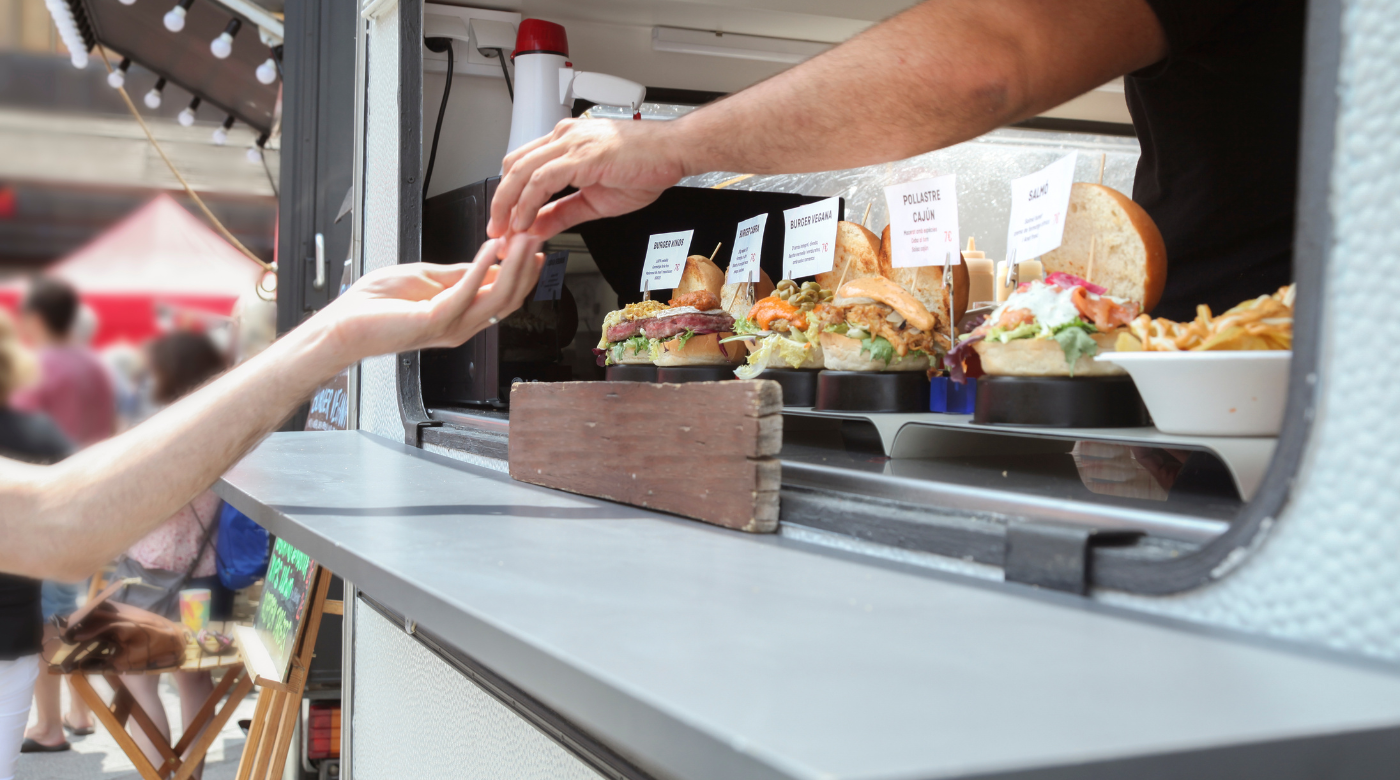
A food truck menu has to do more with less than almost any menu in foodservice. You’re working with a fraction of the kitchen space, a fraction of the storage, and a customer who is standing in line making a decision in about eight seconds.
But the trucks that build a following don’t try to be a restaurant on wheels. They pick a lane, execute a handful of items exceptionally well, and get them out quickly to keep the line moving.
Whether you’re launching a new truck, refreshing a concept that isn’t converting, or figuring out what to serve before you’ve bought your equipment, this guide covers the menu items, concept ideas, design decisions, and operational considerations that go into building a food truck menu customers come back for.
What Should Be Included in a Food Truck Menu?
A strong food truck menu typically covers five things: a signature item, a tight core menu, sides and add-ons, and beverages. Some trucks add a rotating special or seasonal item on top.
The categories to build around:
- Signature item: The dish people seek you out for and describe to their friends. Every successful truck has one
- Core menu: Five to eight items that cover your concept without overloading your prep and storage; this is the bulk of your sales
- Sides and add-ons: Fries, chips, slaw, extra protein, premium toppings. Low prep, high margin, and the fastest way to raise your average ticket
- Beverages: Bottled drinks and canned sodas require almost no labor and carry strong margins
- Rotating specials: Optional, but useful for testing new items and giving regulars a reason to check back
Food Truck Menu Ideas by Concept
The best food truck concepts are specific. “American food” is not a concept, but a smash burger truck with three burgers and one great fry is. Here are menu ideas organized by the concepts that consistently perform on the street.
Taco and Mexican Food Truck Menu Ideas
One of the most proven food truck formats, and for good reason: tacos are fast to assemble, easy to eat standing up, and built around proteins you can batch in advance.
Menu ideas to consider:
- Street tacos: carne asada, al pastor, carnitas, pollo
- Birria tacos with consommé
- Burritos and breakfast burritos
- Quesadillas
- Loaded nachos
- Elote or esquites
- Chips and salsa or guacamole
- Horchata and aguas frescas
Note: Your proteins should be batch-cooked and held, not cooked to order. Assembly is what happens at the window and is what lets a taco truck turn a line fast.
BBQ Food Truck Menu Ideas
BBQ works for a food truck because the cooking and prep happens hours before service, and when done right, your window operation is just slicing and plating.
Menu ideas to consider:
- Brisket, pulled pork, and smoked chicken
- Ribs by the half or full rack
- BBQ sandwiches with slaw
- Loaded BBQ fries or nachos
- Smoked sausage links
- Mac and cheese, baked beans, cornbread, coleslaw
- Burnt ends when you have them
Note: Invest in proper warming and holding equipment, and plan your cook volume carefully.
Burger and American Comfort Food Menu Ideas
High demand, broad appeal, and strong margins. The challenge is differentiation, since you’re competing with every other burger in town.
Menu ideas to consider:
- Smash burgers: single, double, and a loaded signature
- Specialty burgers with a distinct point of view
- Chicken sandwiches, crispy or grilled
- Hot dogs and loaded dogs
- Hand-cut or seasoned fries
- Tots, onion rings, or loaded fries
- Milkshakes if you have the equipment and the freezer space
Note: Griddle space is the biggest bottleneck; know how many patties you can run at once and build your menu and your line expectations around that number.
Pizza Food Truck Menu Ideas
Pizza trucks draw a crowd, especially at breweries and events, but they’re equipment-dependent. If you’ve made the oven investment, keep the menu tight to maximize throughput.
Menu ideas to consider:
- Three to five signature pies
- Build-your-own with a limited topping list
- Personal-size pizzas for faster cook times
- Garlic knots or breadsticks
- A simple side salad
- Cannoli or a single dessert item
Note: Your oven’s capacity sets your ceiling for the night. Personal pies cook faster and move the line better than full-size pizzas at high-volume events.
Breakfast Food Truck Menu Ideas
An underserved window with a built-in audience: office parks, construction sites, and morning commuter routes with lower competition than lunch and dinner service.
Menu ideas to consider:
- Breakfast burritos and tacos
- Breakfast sandwiches on croissant, biscuit, or bagel
- Loaded breakfast bowls
- Hash browns or breakfast potatoes
- Pancakes or French toast sticks
- Coffee, cold brew, and orange juice
Note: Breakfast rewards pre-assembly more than others. Wrapped burritos held hot let you serve a 20-person line in minutes, which matters a lot when customers are trying to get to work.
Dessert Food Truck Menu Ideas
Dessert trucks thrive at festivals, markets, and events where people have already eaten, and have high margins with minimal cooking equipment required.
Menu ideas to consider:
- Ice cream, soft serve, or rolled ice cream
- Churros with dipping sauces
- Funnel cakes or fried dough
- Gourmet cookies and cookie sandwiches
- Mini donuts
- Shaved ice or Italian ice
- Milkshakes and floats
Note: Dessert is highly event-dependent and weather-sensitive, so make sure to build your schedule around festivals, markets, and private bookings rather than daily street service.
Healthy and Vegetarian Food Truck Menu Ideas
This concept has growing demand and limited competition in most markets, and works particularly well near gyms, office parks, universities, and health-conscious neighborhoods.
Menu ideas to consider:
- Grain bowls with customizable proteins and toppings
- Loaded salads substantial enough to be a meal
- Wraps and pitas
- Falafel and hummus plates
- Plant-based burgers and tacos
- Smoothies and fresh juices
- Acai or yogurt bowls
Note: Bowl and wrap concepts are assembly-driven, which makes them fast, but they demand more refrigerated storage for fresh produce than most concepts.
Global and Fusion Street Food Menu Ideas
Fusion concepts stand out precisely because they’re unexpected, and street food traditions from around the world are built for exactly this format.
Menu ideas to consider:
- Korean BBQ tacos or bowls
- Banh mi and Vietnamese rice plates
- Birria ramen
- Gyros and shawarma
- Arepas or empanadas
- Indian-spiced wraps and kati rolls
- Loaded fries with a global flavor profile
Note: Fusion works when the combination makes sense to a customer in three seconds. If your concept needs a paragraph of explanation at the window, it’ll slow your line and lose the sale.
How to Build Your Food Truck Menu
Knowing what you could serve is the easy part, but narrowing it to what you should serve given your truck, your schedule, and your customers is what makes a menu work.
1. Start With Your Equipment and Space
With food trucks, the menu follows the kitchen.
Before you finalize a single item, you should inventory what you have: griddle space, fryer capacity, burner count, oven access, refrigeration, and dry storage. Then ask whether your menu can be produced on that equipment during a long rush.
- Every item should use equipment you already have, not equipment you hope to add
- Items that compete for the same equipment during peak service create bottlenecks
- Storage is as limiting as cooking capacity; if the ingredients don’t fit, the item doesn’t work
2. Know Where You’ll Be Serving
The same menu performs very differently depending on where the truck is parked.
- Breweries and bars: Shareable, indulgent, salty; food that pairs with drinking and encourages a second round.
- Office parks and lunch service: Fast, portable, and priced for a daily habit rather than a treat.
- Festivals and events: High-volume, walkable, and visually distinctive; items people can eat while moving.
- Late-night: Comfort food, bigger portions, and a menu simple enough to execute late at night.
If you serve multiple location types, build a core menu that works everywhere and adjust your specials to the crowd.
3. Build Around a Signature Item
Your signature item should be something you execute better than anyone else nearby, that photographs well, and that you can produce consistently at volume. Everything else on the menu supports it.
4. Design for Speed
On a truck, ticket time is revenue. A line that moves is a line that keeps growing; a line that stalls is customers walking away.
- Prep and portion as much as possible before service
- Favor assembly over cooking at the window
- Batch proteins and components, finish to order
- Time your items during a slow service and cut anything that consistently runs long
5. Keep It Tight
The single most common mistake new truck operators make is launching with too many items. A big menu on a small truck means more inventory, more prep, more waste, slower service, and more ways to be inconsistent.
Start small and add items once you know what sells and what your line can handle.
Food Truck Menu Board Ideas and Design
Your menu board is doing a job no restaurant menu has to do: communicating your entire offering to someone standing feet away, often in bright sun, in the time it takes them to walk up.
What works:
- Readability first: Large, high-contrast type; if it can’t be read from the back of the line, it’s too small.
- Group by category: Mains, sides, drinks; clear sections let customers find what they want without scanning the whole board.
- Highlight your signature: One featured position or callout; if everything is highlighted, nothing is.
- Keep descriptions short: Three to six words per item; customers won’t read more than that while standing in line.
- Use photos selectively: One or two strong images of your signature items can help, but try to avoid a board covered in photos as it reads as cluttered and cheap.
- Make it updatable: You will sell out of items as service moves along; try using a board with changeable elements like magnetic pieces, chalk sections, or a digital display.
- Put prices where they’re easy to find: Hiding prices creates hesitation at the window, and hesitation slows the line.
Digital boards offer flexibility for specials and sold-out items, but they require power and can wash out in direct sunlight. Many operators run a printed core menu with a small chalk or magnetic section for daily changes.
Pricing Your Food Truck Menu
Food truck pricing works differently from restaurant pricing because your costs include things a brick-and-mortar doesn’t carry, and your revenue comes in concentrated windows rather than spread across a full day.
- Target a food cost between 28% and 35% for most truck concepts, similar to restaurants, but with less room for error given lower overall volume.
- Account for mobile-specific costs: Fuel, generator operation, event fees and vendor percentages, commissary rental, and permit costs all need to be covered by your menu prices.
- Price for your service window: If your revenue comes from a three-hour lunch rush, your prices need to cover a full day of prep, travel, and cleanup.
- Use combos to raise the average ticket: A main, side, and drink bundled at a modest discount reliably increases spend per customer while simplifying ordering.
- Lean on high-margin add-ons: Fries, extra protein, premium toppings, and canned drinks carry strong margins and add almost no prep time.
- Keep prices round where you can: Cash handling is faster with clean numbers, and speed at the window matters.
For a detailed walkthrough of plate costing and food cost percentage math, see our guide on how to price your restaurant’s menu.
How Many Items Should Be on a Food Truck Menu?
Most successful food trucks run five to eight core items, plus sides and drinks.
It reflects what a small kitchen can prepare, store, and execute consistently during a rush, and going beyond it can create problems:
- More ingredients than your storage can hold
- Longer prep days for the same revenue
- More waste from items that don’t move
- Slower ticket times as the line juggles more components
- More inconsistency, because nobody masters twelve items the way they master six
Trucks that feel limited by a small menu usually aren’t; they’re limited by not having a strong enough signature item.
Testing and Refining Your Menu
Your opening menu is a hypothesis, but the sales data tells you whether it was right.
- Track item-level sales from day one: Your POS should tell you exactly what’s moving and what isn’t
- Cut underperformers without sentiment: An item that sells three times a service is costing you storage, prep, and complexity for almost no return
- Use specials as low-risk tests: Run a potential new item as a special for a few services before committing it to the board
- Rotate seasonally: Seasonal ingredients cost less at peak and give regulars a reason to check what’s new
- Listen at the window: Customers will tell you what they wish you had, so keep it in mind when you hear the same request repeatedly
How Shamrock Supports Food Truck Operators
A food truck menu only works if the ingredients behind it are consistently available and consistently priced. Shamrock Foodservice Warehouse gives mobile operators the supply foundation to run a tight, profitable menu.
Everything in One Stop
Running a food truck means limited time between services, and sourcing from a single supplier beats managing multiple vendor relationships and delivery windows.
- Proteins, produce, dairy, and dry goods across every category a truck menu needs
- Disposables, packaging, and to-go containers built for mobile service
- Cleaning and sanitation supplies to meet health department requirements
Stocking Up on a Tight Turnaround
Food trucks restock constantly and often on short notice; a last-minute event booking or an unexpectedly busy weekend can clear your inventory fast.
- Walk-in warehouse access with no membership fees, so you can shop when you need to
- In-stock essentials with predictable availability across all Shamrock locations
- Special order options with next-day availability on most items
Controlling Your Food Costs
With lower volume than a restaurant, every point of food cost matters more on a truck.
- Competitive case-pack pricing that protects margins on high-volume items
- Consistent product quality so your signature items taste the same every service
- In-store expertise to help identify products that fit your concept and budget
Latest Posts

Categories