

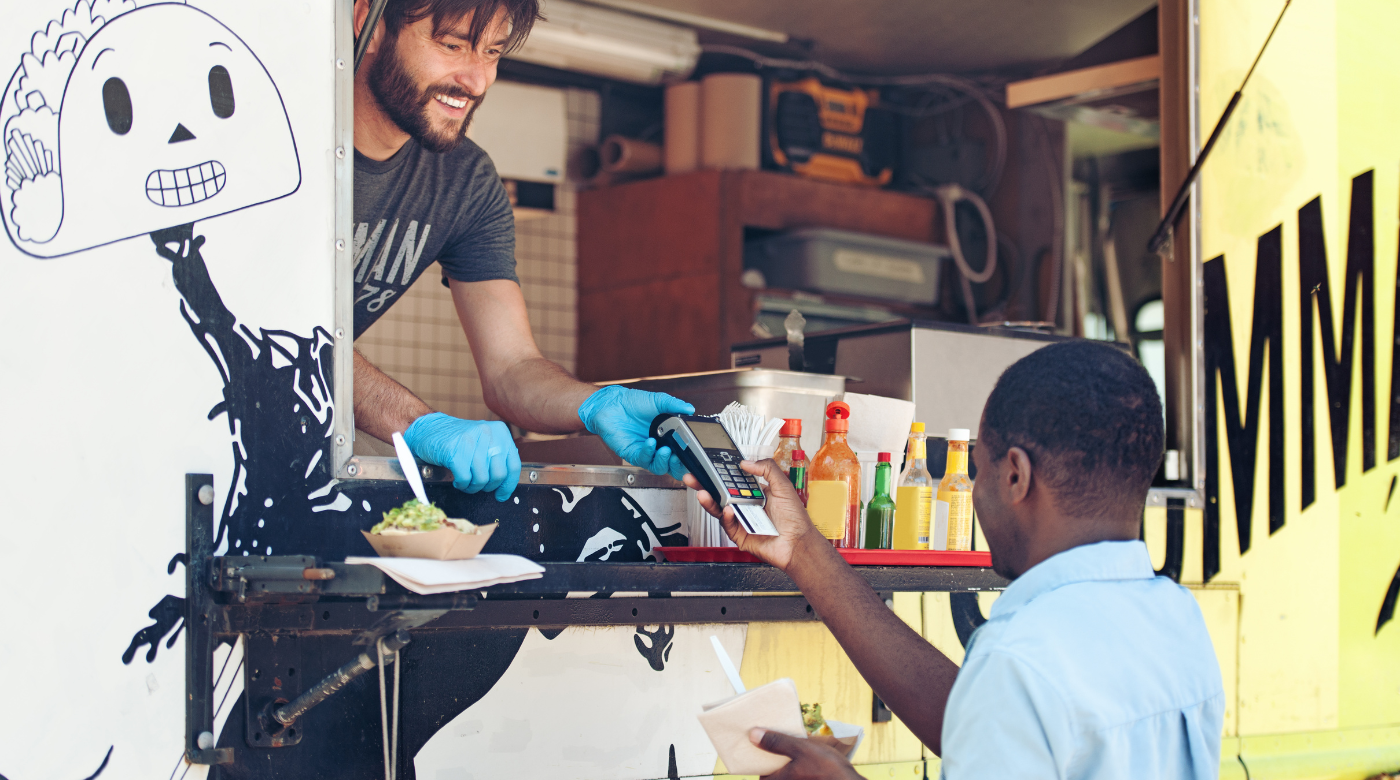
Food trucks look like the easier path into foodservice because they have no lease, no dining room, no twelve-hour days waiting for customers who may or may not come; you just park where the people already are and serve them, right?
Some of that is true, but what catches new operators off guard is everything that surrounds the cooking: the permits that vary by every city you serve in, the commissary kitchen you’re required to use but nobody mentioned, the generator that fails on your busiest Saturday, and the fact that a truck is both a restaurant and a vehicle that requires maintenance.
Plenty of trucks are profitable, and the startup cost is a fraction of a brick-and-mortar restaurant. It just usually only rewards operators who plan for the whole picture before they buy a truck. This guide walks through every step of starting a food truck, from defining your concept to your first service.
1. Define Your Concept and Research Your Market
Before you look at trucks, decide what you’re selling and to whom.
Get specific with your concept
The food trucks that build a following are the ones people can describe in a sentence. “Birria tacos” is a concept. “Mexican food” is a category. Specificity makes you memorable, simplifies your equipment needs, and makes marketing much easier.
Know who you’re serving
Office lunch crowds, brewery regulars, festival attendees, and late-night bar traffic all want different food at different price points. Pick your primary audience and build toward them rather than trying to serve everyone.
Scout the local scene
Spend time where trucks actually operate in your market:
- Which concepts are already saturated, and which are missing entirely
- Where trucks are parking, and which spots draw real lines
- What local trucks charge and what the average ticket looks like
- Which breweries, business parks, and events host trucks regularly
Talk to operators if they’ll give you the time; the food truck community tends to be more collaborative than competitive, and an hour with someone running a truck in your market is worth more than a week of research.
For a broader look at where the industry is heading, see our guide on food truck industry trends.
2. Write Your Food Truck Business Plan
A business plan is where your concept gets tested against real numbers before you commit capital. It’s also required if you plan to seek financing, because no lender will consider a loan for your food truck without one.
Your business plan should cover your:
- Concept and target market
- Menu direction and pricing
- Startup costs and funding requirements
- Truck and equipment plan
- Operating schedule and target locations
- Marketing strategy
- Financial projections with a break-even timeline
Food trucks have one planning characteristic worth modeling carefully: revenue is weather-dependent and seasonal. Your projections need to account for the months when outdoor service slows down, not just your ideal weekends.
For a full section-by-section walkthrough, see our guide on how to write a food truck business plan.
3. Understand Your Startup Costs
How much does it cost to start a food truck? Most operators spend between $50,000 and $175,000 to get on the road, with the truck itself driving most of the variance.
Typical startup cost ranges
- Used truck, already equipped: $30,000–80,000
- Used truck requiring build-out: $20,000–50,000 for the vehicle, plus $25,000–75,000 for the kitchen build
- New custom build: $100,000–200,000+
- Concession trailer: $15,000–60,000; significantly cheaper, but you’ll need a tow vehicle
Where the rest of the money goes
- Kitchen equipment: $10,000–40,000 if not included with the truck (cooking equipment, refrigeration, prep surfaces, hood and fire suppression)
- Generator: $3,000–10,000 for a commercial-grade unit sized to your equipment
- Permits and licenses: $1,000–5,000 depending on your jurisdiction and how many you need
- Commissary kitchen: $400–1,200 per month, often with a deposit upfront
- POS system: $500–2,000 with LTE capability
- Insurance: $2,000–5,000 annually for commercial auto and general liability
- Vehicle wrap and branding: $2,500–7,000
- Initial inventory: $1,500–5,000
- Website and marketing: $500–3,000
- Working capital: $10,000–25,000 to cover your first few months
Monthly operating costs: typically run $5,000–15,000 and include commissary rent, fuel and propane, food costs, labor, insurance, permit renewals, vehicle maintenance, and event or commissary fees.
Ways to start leaner
- Buy a used truck that’s already built out and permitted; it’s much cheaper than building from scratch
- Start with a concession trailer and upgrade later
- Lease a truck for your first season to validate the concept before buying
- Build your menu around equipment that comes with the truck rather than equipment you’d have to add
- Buy used cooking equipment where it makes sense, but never cut corners on the generator or fire suppression
4. Secure Your Funding
Can you start a food truck with no money?
Not realistically; even the leanest trailer setup requires several thousand dollars in permits, inventory, and insurance before you serve a customer. What you can do is start with far less than the full purchase price of a truck.
Your main options
- SBA loans: SBA 7(a) loans are the most common route for food truck financing and can cover the vehicle, equipment, and working capital. You can expect to need a solid business plan and some personal investment.
- Equipment financing: The truck itself serves as collateral, which often makes approval easier than an unsecured loan; terms typically run three to seven years.
- Truck leasing or rental: Renting a fully equipped truck by the month or by the event is the lowest-capital way to start. It costs more per month than ownership, but it lets you test the concept without a six-figure commitment, and many operators use a rental season to build the revenue history that makes a loan application stronger.
- Starting with a trailer or cart: A concession trailer costs a fraction of a truck and gets you operating; plenty of established truck operators started this way.
- Investors and partners: Reduces your personal exposure; formalize the arrangement with a written operating agreement.
- Personal savings: Most lenders want to see owner investment; self-funding part of your startup strengthens every other funding conversation.
5. Buy or Build Your Truck
This is the biggest decision you’ll make and also the one with the highest chance of something going wrong if you’re not fully prepared.
Your options
- Buy used and already equipped: The fastest and usually cheapest path; you inherit a working kitchen and often a truck that’s already passed inspection.
- Buy used and build out: More control over the layout, lower upfront vehicle cost, but build-outs regularly run over budget and over schedule.
- Order a new custom build: You get exactly the truck you want, properly engineered, but you also pay the most and wait the longest; lead times of four to eight months are common.
- Lease: Lowest capital commitment, highest monthly cost; good for testing a concept or covering a first season.
- Trailer instead of truck: Significantly cheaper and easier to repair, since the kitchen and the vehicle are separate; the tradeoff is maneuverability, setup time, and needing a vehicle capable of towing it.
What to inspect on a used truck
- Engine and transmission: Get an independent mechanic to inspect it before you buy.
- Generator age and hours: Generators are the most common point of failure on a food truck; ask for service records.
- Equipment condition and age: Commercial equipment is built to last, but ask what’s original and what’s been replaced.
- Hood, ventilation, and fire suppression: Must be current and inspection-ready; replacing a suppression system is costly.
- Plumbing and tanks: Fresh water, gray water, and water heater; confirm tank capacities meet your local health department’s requirements.
- Electrical system: Confirm the panel and wiring can handle your full equipment load simultaneously.
- Prior health inspection history: A truck that has passed inspection in your jurisdiction is worth a premium.
Build-out expectations
If you’re building, budget more time than you’re quoted. Four months is a common estimate, and six is a common reality. Don’t book events or announce an opening date until your truck has passed inspection.
Wrap and branding
Your truck is your sign, your storefront, and your marketing all together. A professional wrap runs $2,500–7,000 and is one of the better branding investments you’ll make; plus people photograph trucks that look good, and that’s free UGC.
6. Handle Licensing, Permits, and Insurance
Food truck permitting is more complex than almost any other foodservice format, because you’re regulated as a food business and a vehicle and you may operate across multiple jurisdictions. Requirements vary significantly by state, county, and city.
We can’t tell you exactly what your market requires because it varies by location, but here’s what to ask about:
- Business license and entity registration: LLC or other structure, registered with your state
- EIN: federal tax ID, free from the IRS
- Mobile food vendor permit: the core food truck permit, often required separately in every city or county you serve
- Health department permit: your truck will be inspected before you operate and periodically after
- Food handler and food manager certifications for you and your staff
- Fire safety inspection: hood suppression systems and propane setups are typically inspected separately
- Propane permit if your equipment runs on gas
- Parking permits: many cities restrict where and how long trucks can park
- Special event permits for festivals and public events
- Seller’s permit for collecting sales tax
- Commissary agreement: frequently required as a condition of your health permit
Insurance you’ll need
- Commercial auto: personal policies exclude business use
- General liability: most events and private property hosts require proof before they’ll let you park
- Workers’ compensation: required in most states once you have employees
- Equipment and property coverage for the truck and what’s in it
Where to start
Contact your county environmental health department and your city’s business licensing office directly. They’re authoritative for your market and will usually provide a full checklist for your area.
Your state’s Small Business Development Center offers free advising, and the SBA’s local resource directory is the fastest way to find both.
Start early, because permitting routinely takes longer than expected, and you can’t serve or book events until it’s done.
7. Line Up Your Commissary Kitchen
Most health departments require food trucks to operate out of a licensed commissary kitchen. It’s the requirement new operators most often don’t know about until they’re deep into the process.
What a commissary provides
- A licensed commercial space for food prep and storage
- Potable water fill and gray water disposal
- Warewashing facilities
- Dry and cold storage
- Often, overnight truck parking
What a commissary costs
Typically $400–1,200 per month depending on your market and how much access you need. Some charge hourly, some monthly, some a flat fee for basic services like water and waste disposal.
How to find one
- Search for “commissary kitchen” or “shared commercial kitchen” in your area
- Ask local truck operators where they’re based; most are happy to share
- Some restaurants will rent off-hours kitchen access, though you’ll need a written agreement and health department approval
- Churches, schools, and community centers occasionally rent commercial kitchen space
Confirm with your health department that any arrangement you’re considering satisfies their requirements before you sign anything.
8. Build Your Menu
Your food truck’s menu needs to work inside a kitchen the size of a hallway, during a rush, with whatever equipment your truck came with.
The principles that matter most:
- Keep it small: Most successful trucks run five to eight core items; more than that strains your prep, storage, and service speed.
- Build around a signature: One item people seek you out for and recommend to others.
- Design for speed: Batch and prep in advance and assemble at the window; ticket time is revenue when you’re serving a line.
- Match your menu to your equipment, not the other way around; your griddle, fryer, and burner capacity set your ceiling.
- Add high-margin sides and drinks: Fries, chips, and canned beverages take almost no labor and lift your average ticket.
For concept-specific menu ideas, pricing guidance, and menu board design, see our full guide on food truck menu ideas.
9. Equip Your Truck
What you need depends heavily on your concept and what came with your truck, but most food trucks build around the same core categories:
- Cooking equipment: griddle, fryer, range or burners, and any concept-specific equipment
- Refrigeration: under-counter units and freezer space rated for mobile use
- Hood, ventilation, and fire suppression: required by code, non-negotiable
- Water systems: fresh water tank, gray water tank, pump, and water heater
- Power: generator or shore power connection sized for your full equipment load
- Prep and holding: stainless work surfaces, steam table or holding cabinets, sheet pan racks
- POS: LTE-enabled so you’re not dependent on event WiFi
- Smallwares, disposables, and cleaning supplies
For the complete list with sizing guidance and buying considerations, see our food truck supplies and equipment checklist that comes with a downloadable PDF.
10. Find Your Locations and Build a Schedule
Where you park determines what you earn. Trucks with identical food and identical pricing can have wildly different revenue based entirely on their location strategy.
Where food trucks actually make money
- Breweries and taprooms: Many don’t serve food and actively want trucks; often the most reliable recurring revenue available to a new truck.
- Office parks and business districts: Weekday lunch service with predictable volume, though limited to a narrow window.
- Festivals and public events: High-revenue days, but competitive to get into and often requiring vendor fees or revenue percentages.
- Private catering and events: Weddings, corporate functions, and parties; guaranteed revenue booked in advance, with no weather risk on the sales side.
- Late-night near bars and venues: Strong margins and limited competition, if your concept fits the crowd.
- Farmers markets and community events: Good visibility and audience building, moderate revenue.
Getting in
- Approach breweries and businesses directly: most have a point person who schedules trucks.
- Apply to festivals and events early: rosters fill months in advance.
- Build relationships with event organizers: a good first event leads to repeat invitations.
- Understand parking regulations before you park anywhere on public streets; fines and shutdowns are common for operators who assume.
Build a schedule people can follow
The trucks with the strongest followings are predictable. Same brewery every Thursday, same office park every Tuesday. Customers can’t become regulars if they can’t find you. Try to lock in a weekly rotation as early as you can, and publish it consistently.
11. Market Your Food Truck
A food truck’s marketing problem is different from a restaurant’s because you’re not trying to get found at a fixed address, you’re telling people where you’ll be, every single day.
Social media is your storefront
Instagram and TikTok drive food truck discovery. Post your location daily, and post it early enough that people can plan around it.
- Use location tags on every post
- Publish your weekly schedule so followers can plan ahead
- Short-form video of food coming off the griddle consistently outperforms static photos
- Post when you sell out; it signals demand and builds urgency for next time
Build an audience before you launch
Document the truck purchase, the build-out, the menu testing, the wrap reveal. Pre-launch content gives you a following on day one instead of starting from zero.
Claim your local search presence
Set up a Google Business Profile even without a fixed address; you can list your service area and update your location. Get listed on local food truck directories and tracking apps if your market has them.
Build relationships
Brewery managers, event organizers, and other truck operators will drive more bookings than any ad you run. Show up on time, clean up after yourself, and be easy to work with. That reputation travels fast in a small community.
Pursue private catering
Catering is where many trucks make their best margins because it has guaranteed revenue, known headcount, no weather risk, and no competing trucks parked beside you. Make it easy to find and request on your website and social profiles.
12. Understand Your Revenue Potential
Realistic revenue figures
- Daily revenue: $500–3,000 depending on location, concept, and daypart; festival and event days can run significantly higher.
- Annual revenue: Most established trucks fall between $100,000 and $350,000, though high-performing operations in strong markets exceed that.
- Profit margins: Typically 6–12% after all costs, with well-run trucks reaching the higher end.
- Path to profitability: Most trucks reach consistent profitability within 12 to 24 months.
What separates profitable trucks from struggling ones
- Location consistency: Reliable recurring spots beat chasing one-off events.
- Tight food cost control: Target 28–35%, and track it monthly rather than guessing.
- Service speed: More tickets per hour is the most direct lever you have on daily revenue.
- Catering mix: Trucks that supplement street service with private events smooth out their revenue and raise their margins.
- Maintenance discipline: A truck that breaks down loses revenue twice; for the service you miss and the repair you pay for.
Frequently Asked Questions
Q: How much does it cost to start a food truck?
A: Most operators spend $50,000–175,000 total. A used truck that’s already equipped runs $30,000—80,000, while a new custom build can exceed $200,000. A concession trailer is the lowest-cost entry at $15,000–60,000.
Q: What do you need to start a food truck?
A: A concept and business plan, a truck or trailer, kitchen equipment, a commissary kitchen agreement, the licenses and permits your jurisdiction requires, insurance, a POS system, initial inventory, and enough working capital to operate while you build a customer base.
Q: What licenses and permits are needed to start a food truck?
A: Most food trucks need a business license, an EIN, a mobile food vendor permit, a health department permit, food handler and manager certifications, a fire safety inspection, and a seller’s permit. Many jurisdictions also require a commissary agreement and separate permits for each city you serve. Requirements vary; contact your county environmental health department and city licensing office for your specific list.
Q: Can you start a food truck with no money?
A: Not realistically, but you can start with far less than the cost of buying a truck. Renting or leasing an equipped truck, starting with a concession trailer, or financing through an SBA or equipment loan all reduce the upfront capital required. You’ll still need several thousand dollars for permits, insurance, and inventory before your first service.
Q: Can I rent a food truck instead of buying one?
A: Yes. Monthly and per-event truck rentals are available in most markets. It costs more over time than ownership, but it’s the lowest-risk way to validate a concept and a season of rental revenue can strengthen a later loan application.
Q: Are food trucks profitable?
A: Many are. Profit margins typically run 6–12% after all costs, with annual revenue for established trucks ranging from $100,000 to $350,000. Profitability depends most on location consistency, food cost control, service speed, and supplementing street service with private catering.
Stock Your Food Truck With Shamrock Foodservice Warehouse
A food truck runs on short turnarounds and tight margins. You restock between services, often on short notice, and every point of food cost matters more when you’re working with limited volume.
Shamrock Foodservice Warehouse carries what mobile operators depend on, like proteins, produce, dairy, dry goods, beverages, disposables, and cleaning supplies, at wholesale pricing with no membership fees required.
With 15 locations across Arizona, Colorado, Montana, New Mexico, and Texas, restocking before your next service is straightforward wherever you’re parked in the Southwest.
Find your nearest location at shamrockfsw.com/locations.
Latest Posts
Categories